Table of Contents
Ever sat down to a homemade meal and thought, “This tastes… fine, but something’s missing”? Most of us reach for the salt shaker or a drizzle of bottled sauce to fix that flat flavor. But here’s the secret: delicious cooking isn’t about dumping in more salt or sugar—it’s about building flavor from the ground up.
The good news? You don’t need fancy culinary training to do it. By learning how to layer herbs, spices, citrus, and natural umami boosters, you can turn ordinary ingredients into meals that taste bold, balanced, and crave-worthy—without relying on sodium or added sugar.
Think about squeezing fresh lemon over roasted vegetables, stirring a spoonful of miso into soup, or sprinkling a pinch of za’atar on warm bread. These tiny shifts pack more punch than an extra teaspoon of salt ever could. In fact, studies show that herbs and spices don’t just enhance taste—they can also support better health by reducing our reliance on processed flavor crutches.
This guide is your roadmap to no-salt, no-sugar cooking that’s anything but bland. You’ll discover which herbs and spices shine in everyday dishes, how to balance flavors with acids and aromatics, and quick formulas that make food taste brighter in minutes. If you’ve ever wondered how to make food taste good without salt or sugar, you’re in the right place.
Why Cooking Without Salt and Sugar Doesn’t Mean Cooking Without Flavor
Can Food Still Taste Amazing Without Salt or Sugar?
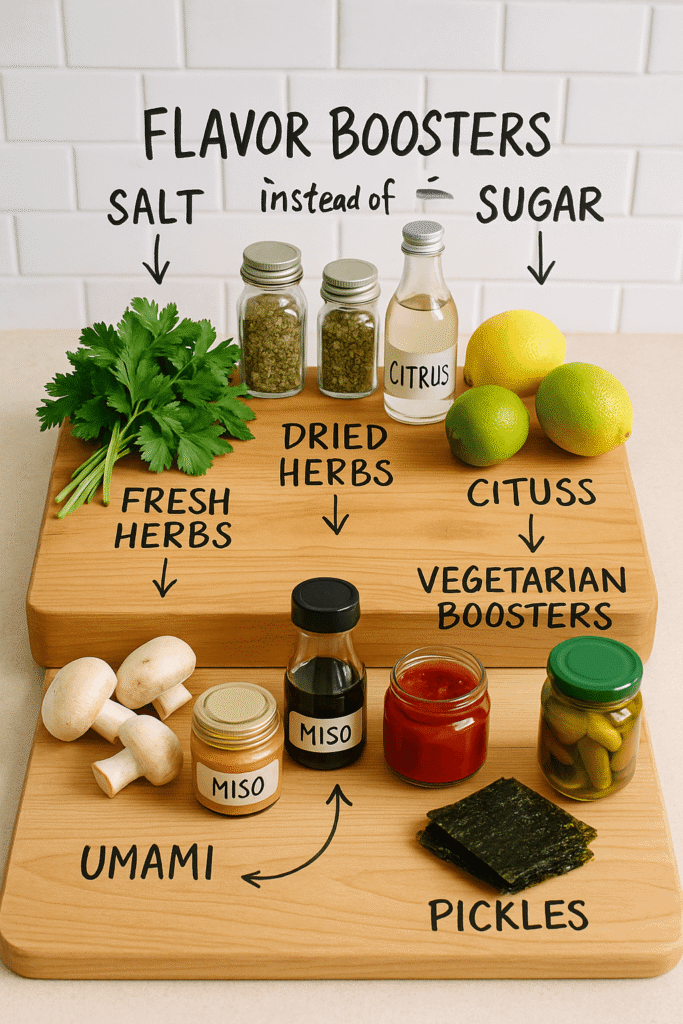
Absolutely. Cooking without salt and sugar doesn’t mean bland meals—it means cooking smarter. The secret is flavor layering: combining herbs, spices, acids, and natural umami so every bite feels vibrant. Imagine a squeeze of lemon cutting through the richness of salmon, or fresh basil lifting a simple tomato sauce. These are the kinds of bright, zesty flavors that make dishes unforgettable—without reaching for the shaker or sugar jar.
What Are the Benefits of Reducing Sodium and Sugar in Cooking?
Lowering salt and sugar in your meals isn’t just about health—it’s about balance. Too much sodium dulls your palate over time, while excess sugar can make savory dishes taste heavy. By learning how to make food taste good without salt or sugar, you reawaken your taste buds. Suddenly, the peppery snap of parsley, the tang of vinegar, or the earthy depth of mushrooms becomes more noticeable. The payoff? Meals that are lighter, fresher, and naturally satisfying—without the hidden bloat or crash.
How Does Flavor Layering Replace Salt and Sugar?
Think of flavor layering as turning up the contrast on a photo. Instead of one-note seasoning, you build complexity:
- Herbs add freshness (parsley, dill, cilantro).
- Spices bring warmth and aroma (cumin, smoked paprika, za’atar).
- Acids like lemon juice or apple cider vinegar brighten heavy dishes.
- Umami boosters—miso, mushrooms, soy sauce—deepen flavor without heaviness.
A simple example: sauté onions slowly until sweet, splash with balsamic vinegar, and finish with thyme. No salt needed, yet the taste feels rich and layered.
What Are Quick Swaps for Salt and Sugar in Everyday Cooking?
Instead of sprinkling salt or stirring in sugar, try these flavor-forward swaps:
- Swap salt for citrus → Finish roasted veggies with lemon zest or lime juice.
- Trade sugar for spice balance → Add cinnamon, nutmeg, or orange zest to oatmeal or yogurt.
- Use umami instead of sodium → Stir miso or soy sauce into soups for instant depth.
- Pickles instead of sweetness → Pickled onions or capers bring tang that perks up grain bowls and tacos.
Quick win: Next time you make pasta, skip the extra salt. Toss hot noodles with olive oil, garlic, chili flakes, and a squeeze of lemon. You’ll get heat, aroma, and brightness—without missing the shaker.
The Bottom Line
Learning how to cook without salt and sugar isn’t a restriction—it’s a liberation. You discover that real flavor doesn’t come from pouring in sodium or sweetness, but from layering herbs, spices, acids, and natural boosters that make every bite come alive. Once you start, you won’t just eat healthier—you’ll actually enjoy food more.
Best Herbs, Spices, and Aromatics for Healthy, Flavorful Cooking
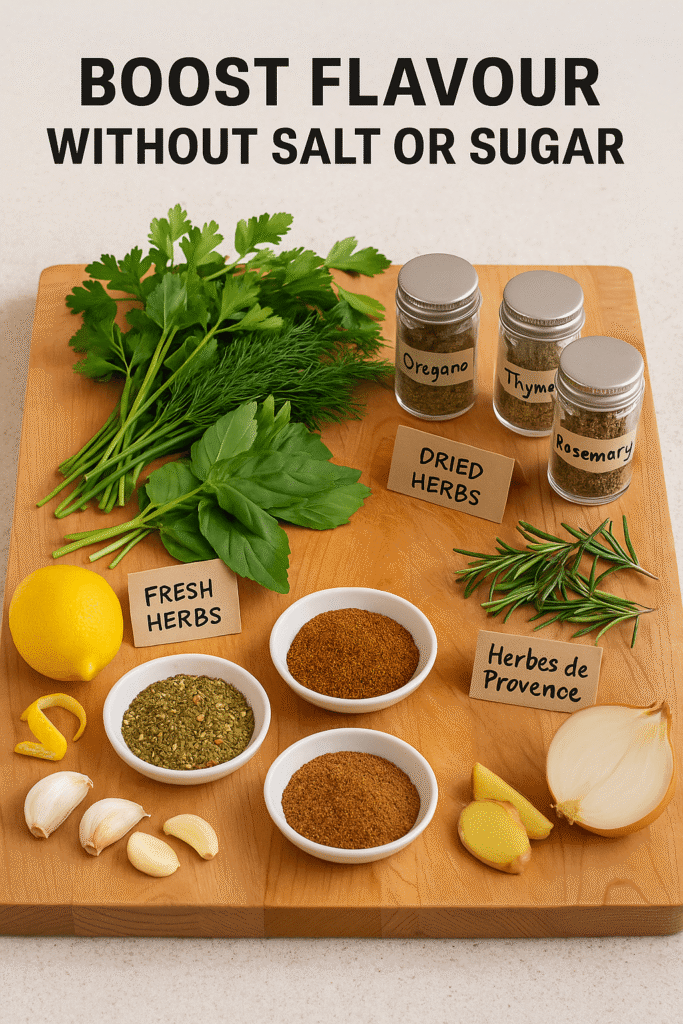
If you’ve ever wondered how to make food taste good without salt or sugar, the answer lies in your spice rack and produce drawer. The right mix of herbs, spices, and aromatics can transform plain ingredients into something bold, bright, and deeply satisfying. Here’s how to use them like a pro.
Fresh or Dried Herbs — Which Should You Reach For?
Think of fresh herbs as your finishing jewelry — bright, leafy, and delicate. Toss fresh parsley into a grain bowl, scatter basil over tomatoes, or add mint to yogurt sauce. They’re best added at the end, where their fragrance can really shine.
Dried herbs, on the other hand, are your slow-simmering backbone. Rosemary or oregano hold up beautifully in soups, stews, or roasts, releasing earthy, savory notes the longer they cook. A good rule of thumb: 1 teaspoon dried = 1 tablespoon fresh.
Pro tip: Warm dried herbs in a little oil before adding liquid. You’ll release their hidden aromas and avoid that “dusty” taste.
What Are the Best Herbs to Boost Everyday Flavor?
Some herbs are so versatile, they deserve VIP space in your kitchen:
- Parsley – clean and peppery; sprinkle over eggs, fish, or roasted veggies for instant freshness.
- Basil – sweet, slightly anise-like; perfect with tomatoes, mozzarella, or tossed into a Thai stir-fry.
- Mint – cooling and lively; try it with lamb, peas, or even iced tea.
- Dill – grassy and bright; unbeatable with salmon, cucumbers, or potato salad.
- Rosemary – piney and bold; roast potatoes or bread never taste the same without it.
- Thyme – savory and grounding; the secret to great soups, beans, and pan sauces.
These herbs do more than replace salt — they add contrast, aroma, and a sense of freshness that sugar and sodium can’t deliver.
How Can Global Spice Blends Make Healthy Meals Exciting?
When you want boldness without bottled sauces, turn to global spice blends. They’re pre-mixed flavor powerhouses that can instantly elevate simple meals:
- Za’atar – thyme, sesame, and tangy sumac; amazing on flatbreads, salads, or roasted chicken.
- Herbes de Provence – rosemary, thyme, marjoram, and lavender; perfect for grilled vegetables or slow-roasted meats.
- Garam masala – warm, sweet-savory Indian blend; finish curries or lentils with a sprinkle.
- Ras el hanout – North African blend; adds depth to roasted carrots or chicken rubs.
Quick win: Keep one blend handy for busy nights. Even a spoonful of za’atar mixed with olive oil can transform plain rice or roasted vegetables.
Why Are Aromatics the True Flavor Foundation?
If herbs are the sparkle, aromatics are the solid base layer every dish rests on. Think garlic sizzling in olive oil, onions melting into sweetness, or ginger perfuming a broth. These humble ingredients create a canvas that makes your herbs and spices pop.
Don’t forget citrus: lemon zest can make a soup taste brighter, lime juice can freshen a grain bowl, and orange peel can turn roasted squash into something special. A sprinkle of zest and a squeeze of juice often replace the need for heavy salt.
Try this: sauté onions until golden, add garlic and ginger, then finish with lemon zest. That simple trio can make beans, tofu, or chicken taste like a restaurant dish.
Key Takeaway
Cooking without salt or sugar isn’t about what you’re missing — it’s about unlocking the best herbs and spices to boost flavor. By balancing fresh and dried herbs, exploring global spice blends, and leaning on aromatics like garlic, ginger, and citrus, you’ll discover how exciting healthy, salt-free, sugar-free cooking can truly be.
Natural Umami Boosters and Salt Alternatives That Add Depth
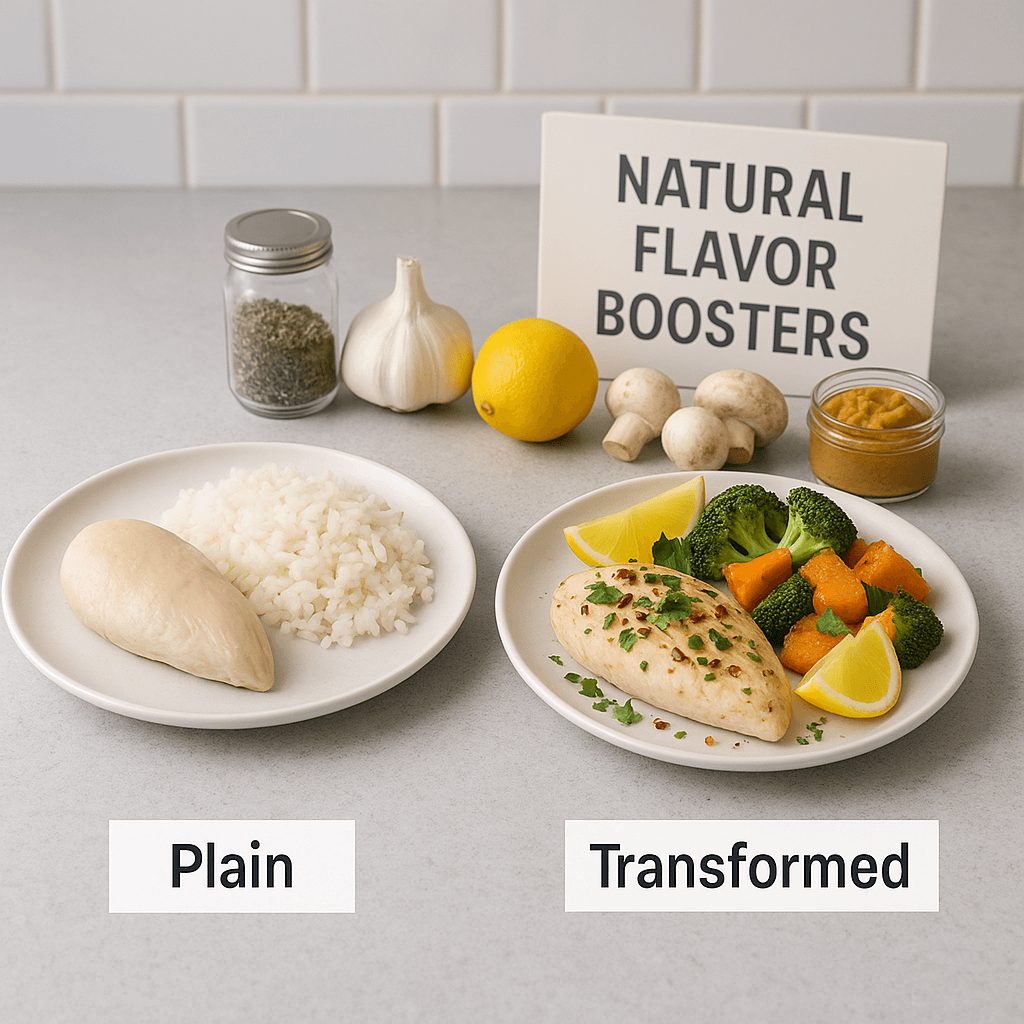
When you cut back on salt and sugar, the secret to keeping food irresistible is simple: unlock natural umami boosters and smart salt alternatives for cooking. These ingredients don’t just “season” your food — they transform it, adding richness, depth, and balance that makes every bite satisfying. Let’s explore how you can use them in your kitchen today.
🍄 How Can Mushrooms and Fermented Ingredients Replace Salt?
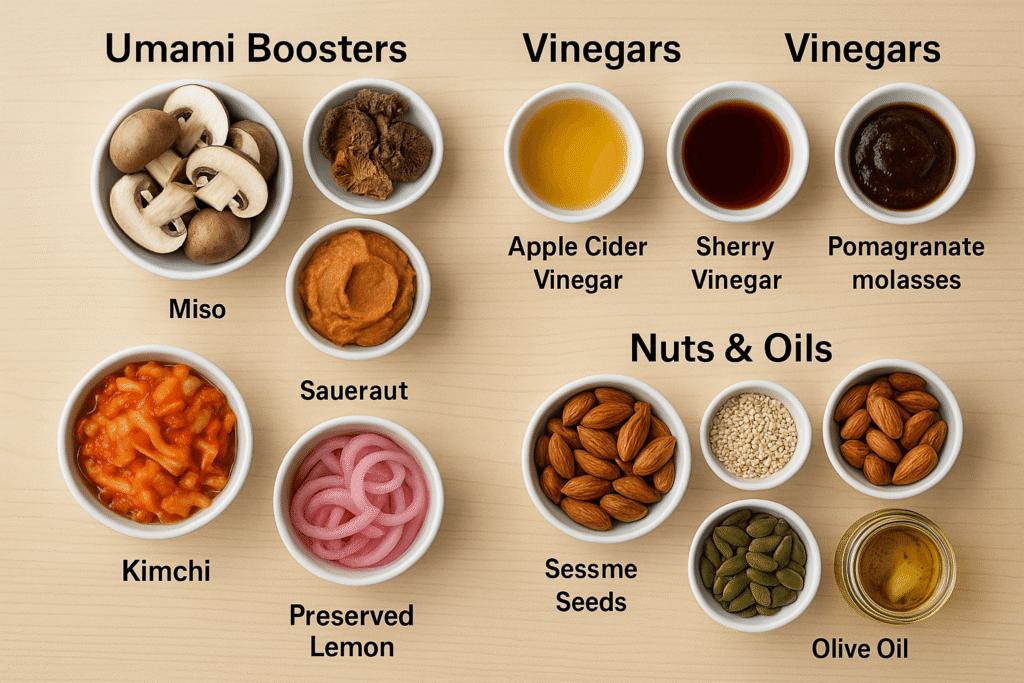
Think of mushrooms as flavor sponges. When sautéed until golden, they release an earthy, meaty aroma that makes soups and stir-fries taste hearty — without a single shake of salt. Dried mushrooms like shiitake or porcini are even more powerful. Grind them into a powder and sprinkle over pasta, gravies, or burgers for an instant salt-free umami upgrade.
Fermented foods like miso paste, soy sauce, and tamari work in the same way. Just a spoonful of miso whisked into a broth or a splash of soy sauce in a marinade layers in that savory “can’t-stop-eating-this” depth. The key? Use them in tiny amounts — you’ll add complexity, not heaviness.
🥂 Can Vinegars and Syrups Really Make Food Taste Better Without Salt?
Absolutely. Acid is one of the most underrated salt alternatives in cooking. A splash of apple cider vinegar in braised greens or a drizzle of sherry vinegar over roasted vegetables sharpens flavors like adjusting the contrast on a photo.
For sweet-savory depth, try pomegranate molasses or tamarind paste. These bring a tangy-sweet kick to dressings, curries, or even roasted carrots. One bite, and you’ll see: your palate craves brightness as much as it craves salt.
🥒 Why Do Pickles and Ferments Make Meals Pop?
Pickled onions on tacos, sauerkraut in grain bowls, or a spoonful of kimchi with fried rice — these aren’t just condiments, they’re natural flavor enhancers. Ferments add crunch, tang, and aroma, giving your dishes layers of interest. Even a teaspoon of brine from preserved lemons can wake up a bland stew faster than a pinch of salt.
🌰 How Do Nuts, Seeds, and Infused Oils Add Depth Without Sodium?
Texture is flavor’s best friend. Toasted nuts (walnuts, almonds, pine nuts) bring a nutty sweetness to pestos and salads, while seeds like sesame or pumpkin add crunch and earthiness.
For a finishing touch, drizzle garlic- or chili-infused olive oil over vegetables or grains. That subtle warmth and aroma turns simple ingredients into a gourmet experience — proof that healthy, no-salt cooking can be luxurious, not bland.
Quick Win: Your DIY Umami Sprinkle
Mix 1 tablespoon mushroom powder with 1 tablespoon nutritional yeast and a pinch of black pepper. Keep it in a jar. Shake over eggs, soups, or roasted veggies whenever your dish feels “flat.” It’s the perfect salt-free flavor booster.
Flavor-Boosting Techniques for No-Salt, No-Sugar Cooking Success
So how do you make food burst with flavor when you’re skipping the usual salt and sugar crutches? The answer lies in learning a few kitchen secrets—techniques that professional chefs swear by, but anyone can do at home. These aren’t complicated recipes; they’re small moves that transform bland meals into bold, satisfying dishes.
What Happens When You Bloom and Toast Spices?
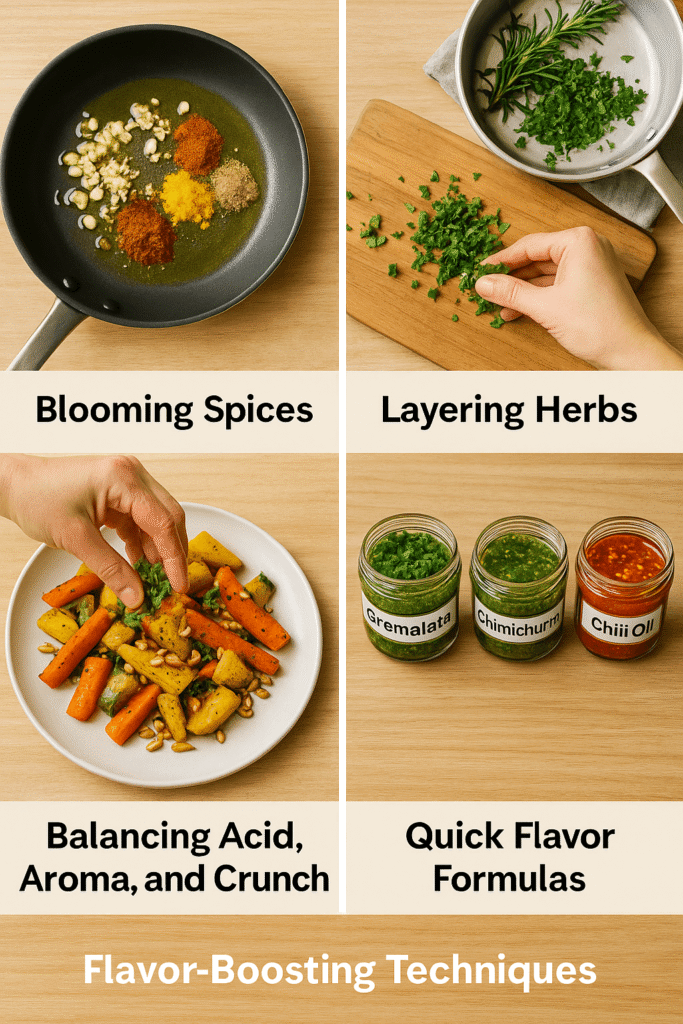
Ever wondered why restaurant curries or stews taste so deep and aromatic? The secret is blooming—briefly frying dried herbs and spices in oil or butter before adding liquid. Just 30 seconds of gentle heat releases their natural oils and perfumes the whole kitchen.
Imagine garlic sizzling in olive oil, followed by a pinch of cumin and smoked paprika. Instantly, you’ve turned flat vegetables into a warm, earthy, salt-free masterpiece. Toasting whole spices—like coriander seeds or fennel—in a dry pan works the same way, creating nutty, smoky layers of flavor.
Why Should You Layer Herbs Instead of Adding Them All at Once?
Think of herbs as background singers and soloists. If you throw them in all at once, they blur together. But when you layer herbs at multiple stages, every voice gets heard.
Start with sturdy herbs like thyme or rosemary while cooking, let them perfume the dish, then finish with delicate parsley or basil at the very end. The result? Bright pops of freshness dancing on top of a savory backbone.
This technique is one of the simplest yet most powerful no-salt cooking tips: instead of salt carrying the flavor, herbs and natural flavor boosters take the spotlight.
How Do Acid, Aroma, and Crunch Replace Salt?
Salt sharpens taste buds, but so does the clever trio of acid, aroma, and crunch.
- A squeeze of lemon or drizzle of sherry vinegar instantly makes a soup or grain bowl brighter.
- A sprinkle of toasted nuts or seeds adds crunch and makes each bite more satisfying.
- Fresh herbs or zest create the aroma that salt usually amplifies.
Picture this: roasted mushrooms tossed with thyme, finished with a splash of balsamic and topped with pumpkin seeds. No sodium overload, just layers of flavor that pop.
What Quick Flavor Formulas Can You Rely On?
Don’t want to measure and fuss? Keep a few quick flavor formulas up your sleeve:
- Lemon-Herb Gremolata → parsley + garlic + lemon zest = instant freshness for fish or roasted veggies.
- Green Herb Sauce (Chimichurri style) → parsley, cilantro, vinegar, and chili = a no-salt flavor bomb for grilled meats or tofu.
- Chili-Garlic Oil → warm oil + garlic + chili flakes = spicy, aromatic drizzle for noodles or greens.
These are your “cheat codes” for making meals taste vibrant and complex without sugar, salt, or bottled sauces.
Takeaway: Mastering these flavorful cooking techniques means you never have to worry about bland “diet food” again. Bloom your spices, layer your herbs, balance with acid and crunch, and lean on quick formulas. With a few natural flavor boosters, every meal becomes brighter, healthier, and way more exciting.
FAQs About Salt-Free, Sugar-Free Cooking with Herbs and Spices
Q1: How can I make food taste good without salt or sugar?
Think of flavor like building a playlist—you don’t need just one loud track (salt or sugar), you need a mix that works together. Start with fresh herbs for brightness, add spices for warmth, and finish with acids (like lemon juice or vinegar) to lift everything up. Then layer in umami boosters such as mushrooms, miso, or tomato paste to give dishes a savory backbone.
👉 Example: Instead of salting your soup heavily, sauté onions and garlic until golden, add a spoon of tomato paste for depth, then finish with parsley and a squeeze of lemon. The result? Bold, balanced flavor—without a single grain of added salt or sugar.
Q2: What are the best herbs and spices to boost flavor naturally?
Some herbs and spices are like instant “flavor buttons” for healthy cooking.
- Parsley → fresh and peppery, the universal finisher
- Basil → sweet, aromatic, and perfect with tomatoes
- Dill → grassy and bright, especially with fish and potatoes
- Thyme & Rosemary → earthy, woodsy anchors for meats and beans
- Garlic & Ginger → the dynamic duo for punch and warmth
- Spice blends → Za’atar for tangy Middle Eastern flair, garam masala for warm Indian depth
🌿 Quick tip: Toss roasted veggies with za’atar and olive oil, or stir ginger and garlic into a quick stir-fry—you’ll forget you ever missed salt.
Q3: What is the healthiest way to season food without salt?
The secret to salt-free cooking is contrast and brightness. Citrus juices, vinegars, and pickled brines sharpen flavors like adjusting the contrast on a photo. Herbs add aroma that tricks your senses into tasting more. Crunchy textures (toasted seeds, nuts) also boost satisfaction without sodium.
🥗 Try this: Drizzle balsamic vinegar over roasted beets, top with toasted walnuts and fresh thyme. The tang, crunch, and herbal perfume make it taste indulgent—yet it’s low-sodium and heart-healthy.
Q4: Can I use dried herbs instead of fresh?
Yes—dried herbs are your slow-simmer heroes. They’re more concentrated and release flavor beautifully in soups, braises, and sauces. Fresh herbs, on the other hand, shine at the finish line, adding brightness and perfume.
🌱 Rule of thumb: 1 teaspoon dried ≈ 1 tablespoon fresh.
🍲 Example: Add dried oregano to your pasta sauce as it cooks, then finish with a handful of fresh basil just before serving. That one-two punch makes the sauce pop.
Q5: What are the best flavor boosters for vegetarian or vegan meals?
Plant-based cooking loves a little extra “oomph.” That’s where natural umami boosters come in:
- Mushrooms → earthy, meaty depth (try mushroom powder in soups)
- Miso → salty-sweet richness (whisk into dressings or spreads)
- Soy sauce or Tamari → a splash adds backbone to grains or stir-fries
- Tomato paste → caramelized for savory sweetness
- Seaweed → briny, ocean-kissed flavor in broths and rice dishes
- Citrus → brightens and balances heavier plant-based meals
🥢 Imagine a bowl of miso soup with mushrooms, tofu, and scallions. It’s light yet deeply satisfying—proving vegetarian food doesn’t have to be bland.
Wrap-Up: Salt-free and sugar-free cooking isn’t about taking away—it’s about adding layers of flavor. Herbs, spices, citrus, umami, and texture work together to make every bite lively, satisfying, and healthy.